Anyone buying a plot of land quickly encounters two cost blocks that are often confused: the development costs (Erschließungskosten) for road, sewer and utility lines, and the real-estate transfer tax (Grunderwerbsteuer) on the purchase price. The decisive question is whether the development contribution (Erschließungsbeitrag) is included in the tax base for the real-estate transfer tax – because that depends on the development status of the plot at the time of the purchase contract. We explain the connections clearly and carefully, so that you can realistically calculate your land purchase in Düsseldorf and NRW.
What are development costs and development contributions?
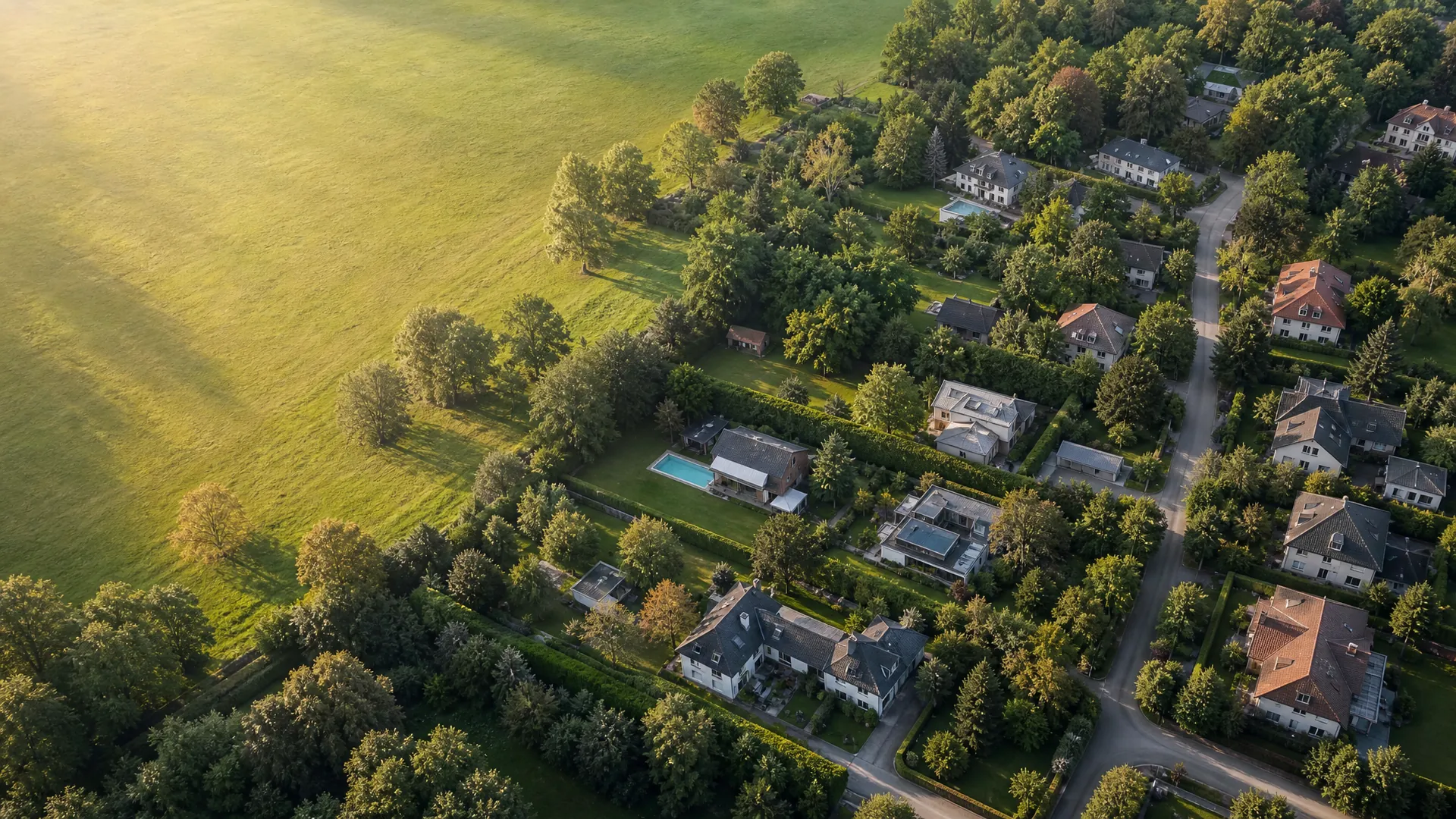
Development means making a plot usable and buildable in the first place. This includes connection to a public road, connection to the sewer system, and supply with water, electricity, gas and, where applicable, heat. Only a developed plot can be built on under the building-law provisions.
The municipalities levy a development contribution (Erschließungsbeitrag) for the construction of the development facilities (Erschließungsanlagen). This is governed by §§ 127 ff. BauGB (Sections 127 to 135 of the German Building Code). The development facilities that are eligible for contributions under § 127 BauGB include, in particular, the public roads, paths and squares intended for development, certain traffic facilities, and noise-protection facilities. The costs for waste water and for the supply of electricity, gas, heat and water are usually billed via separate contributions or connection costs of the respective utilities and statutes.
An important principle: under § 129 BauGB, the municipalities bear at least 10 percent of the eligible development expenditure themselves. The remaining share – usually up to 90 percent – they pass on to the owners of the developed plots.
Developed, partly developed or undeveloped – the distinction
For calculating a land purchase, the development status is the decisive point. Three states are to be distinguished:
- Developed: The development facilities have been built and the plot is connected to road, sewer and utilities. The development contribution has arisen or has already been paid.
- Partly developed: Part of the development is in place, while other measures are still outstanding. Often the traffic access already exists, while the final road construction or individual connections are still missing.
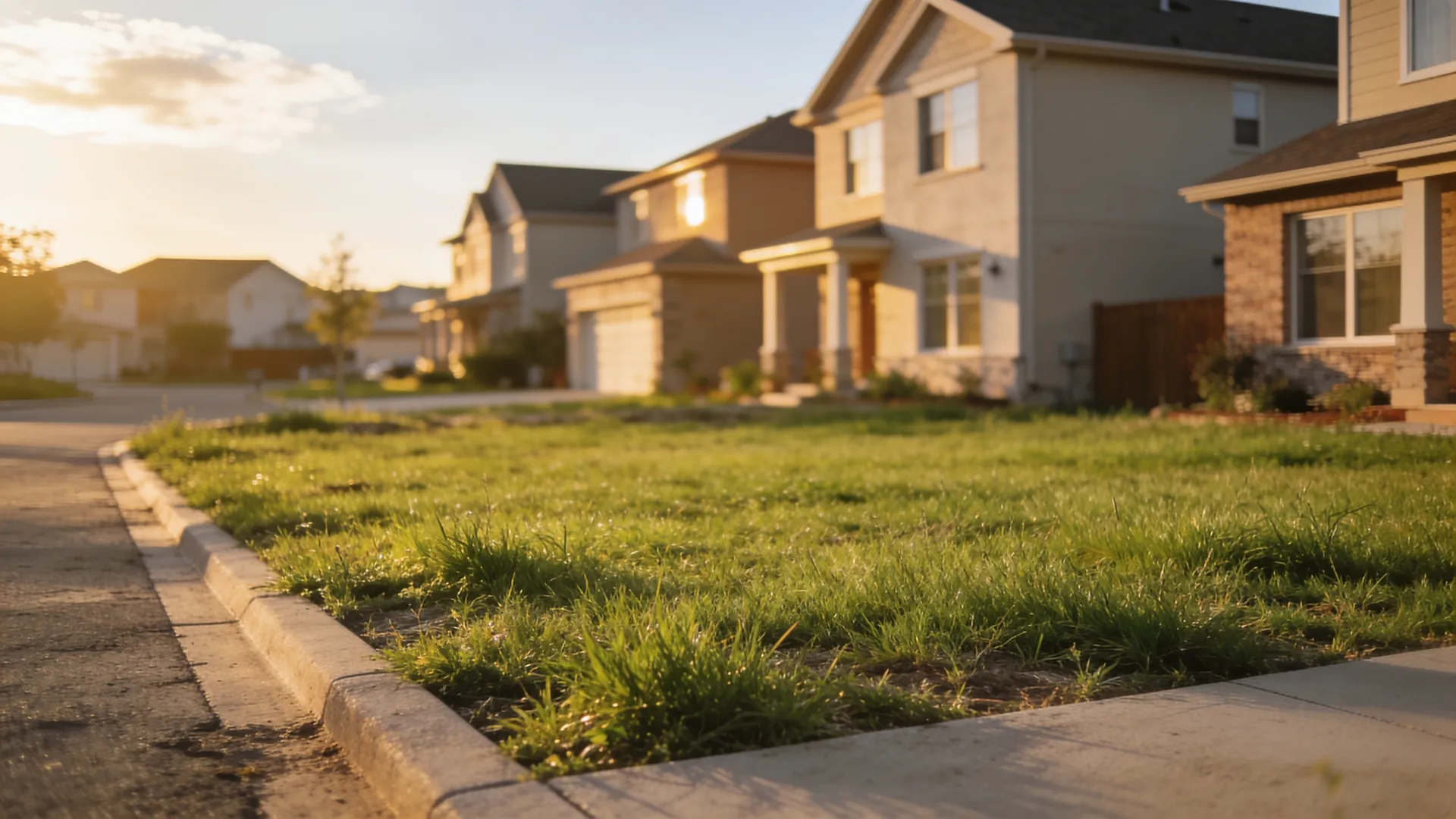
- Undeveloped: The development facilities have not yet been built. The development contribution has not yet arisen and is only levied later by assessment of the municipality.
This distinction is relevant not only in construction terms, but also has direct consequences for the real-estate transfer tax. Anyone buying a supposedly cheap undeveloped plot should definitely include the still-outstanding development contributions in their calculation, since these can amount to several tens of thousands of euros.
Real-estate transfer tax in NRW: basics and tax base
The real-estate transfer tax is incurred as soon as a plot changes owner. In North Rhine-Westphalia the tax rate is 6,5 percent and is thus among the highest in Germany; NRW has been raising this rate to 6,5 percent since 1 January 2015.
The tax is calculated on the so-called consideration. This is governed by § 8 and § 9 GrEStG (Sections 8 and 9 of the Real-Estate Transfer Tax Act). In a normal land purchase, the consideration is as a rule the agreed purchase price – plus all further benefits that the buyer provides to acquire the plot in its owed condition. It is precisely at this point that it is decided whether development costs are taxed too or not.
The core question: when does the development contribution belong to the tax base?
According to the case law of the Federal Fiscal Court (Bundesfinanzhof), the decisive factor is the development status at the time the purchase contract is concluded and the question of the condition in which the plot is owed under the contract. As a rule of thumb it can be stated:
- Already developed plot, development contribution included in the purchase price: If the plot is already actually developed at the time of conclusion of the contract, the subject of the purchase can only be the developed plot. The part of the purchase price attributable to the development then belongs in principle to the tax base of the real-estate transfer tax – even if it is not shown separately.
- Assumption of still-outstanding development contributions not yet arisen, vis-à-vis the municipality: If a municipality obliged to provide development sells a still-undeveloped plot and the buyer undertakes to bear future development contributions, then according to the case law usually only the undeveloped plot is the subject of the acquisition. These future contributions then as a rule do not count toward the tax base of the real-estate transfer tax.
The Federal Fiscal Court (Bundesfinanzhof) confirmed and continued this line, among others, with the judgments of 23 February 2022 (II R 9/21) and of 28 September 2022 (II R 32/20). Caution in the detail is important: it always depends on the individual case – in particular on whether the seller is a municipality obliged to provide development or a private development agent, and which condition of the plot is owed under the contract.
Municipality or private development agent – why this makes a difference
The case law distinguishes according to who the plot is acquired from.
- Acquisition from the municipality obliged to provide development: The municipality is obliged under public law to provide the development. If the buyer of a still-undeveloped plot assumes the obligation to pay future development contributions, then usually only the undeveloped plot is the subject of the purchase. The contributions later levied by assessment then as a rule do not belong to the consideration for real-estate transfer tax purposes.
- Acquisition from a private development agent: If a private development agent sells a plot to be developed by it, and the development costs are included in the purchase price, then according to the case law the developed plot is as a rule owed. The share attributable to the development is then part of the consideration and is subject to the real-estate transfer tax.
This distinction is not always obvious in the specific contract. How a purchase contract is to be classified for tax purposes depends on the exact wording and the circumstances. A binding assessment of your individual case is provided by your tax adviser or the tax authority.
Practical consequences for your calculation
From the rule of thumb, concrete consequences arise for planning a land purchase:
- Developed plot: Here the development contribution is typically already priced into the purchase price and is charged with 6,5 percent real-estate transfer tax. The advantage: you know the total costs from the outset.
- Undeveloped plot from the municipality: The purchase price is often lower, and the development contributions arising later frequently do not count toward the real-estate transfer tax. In return, the contributions come to you with a time lag via an assessment of the municipality and must be financed separately.
- Transparency in the purchase contract: It can make sense to record clearly in the notarial purchase contract in which development status the plot is sold and who bears which contributions. This creates clarity for both sides and for the tax classification.
A calculation example for orientation: with a purchase price of 400,000 euros, 26,000 euros of real-estate transfer tax is incurred in NRW. If this price includes a development contribution of 30,000 euros for an already developed plot, this share is part of the taxed consideration. If, on the other hand, future contributions vis-à-vis the municipality are assumed, these can remain outside the tax base under the conditions mentioned. You should always have the precise classification examined in the individual case.
Selling land in Düsseldorf and NRW – with experience at your side
Whether a plot is developed, partly developed or undeveloped affects not only the tax, but also the realistic market value. A sound valuation takes into account the development status, the location and the building law – and creates the basis for a fair price and a smooth sale.
As the arm of Wolfgang Richter GmbH, we have accompanied owners in the Düsseldorf and North Rhine-Westphalian market in the valuation and sale of land. Over the years, a grown network with more than 20,000 contacts has emerged, which helps us to bring plots and suitable buyers together discreetly and in a targeted manner. On request, a confidential marketing away from the large portals is also an option.
We work transparently and personally, explain every step understandably, and ensure that you also keep the tax framework of your project in view. For the binding tax assessment of your individual case, your tax adviser is at your side.