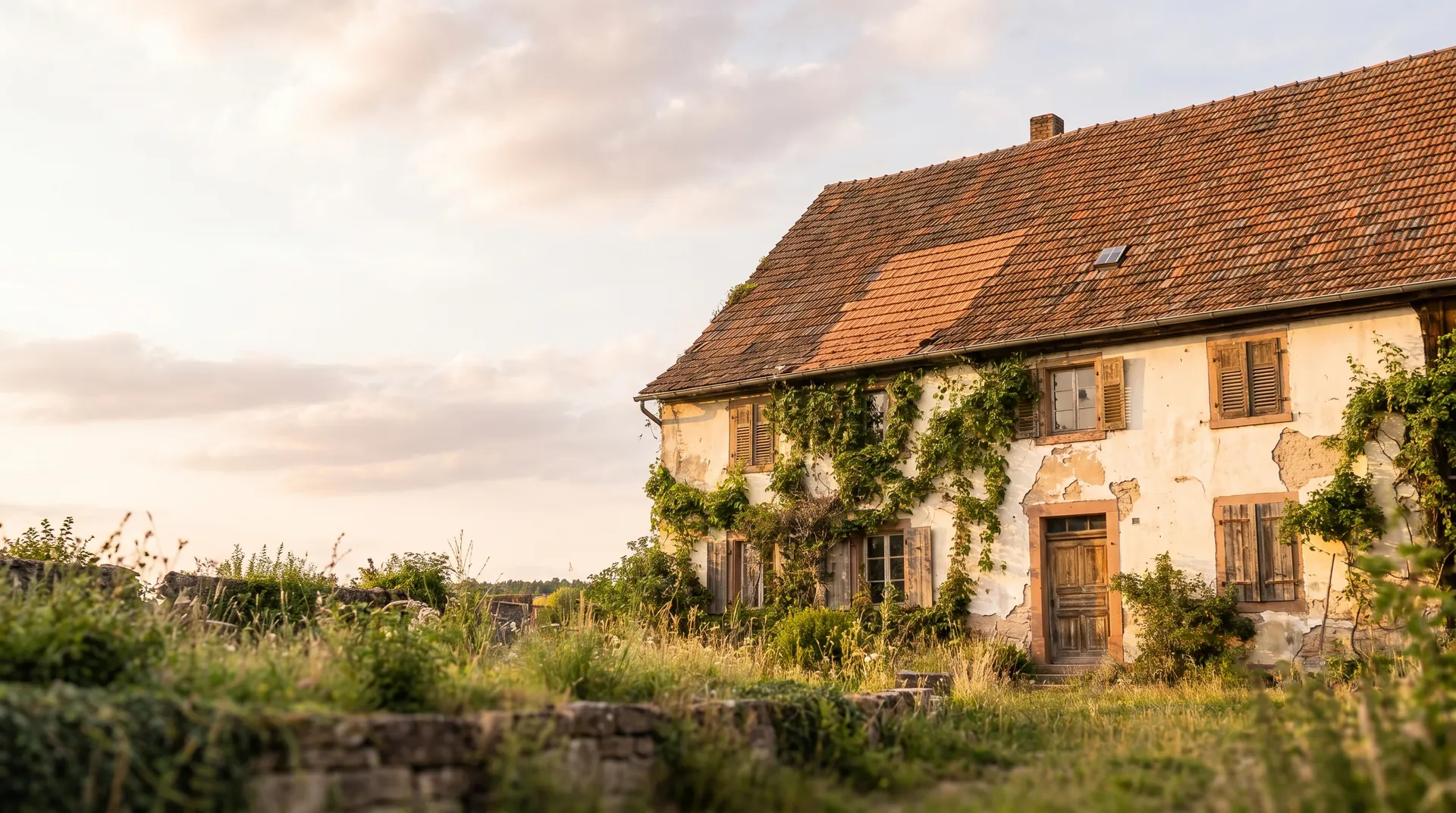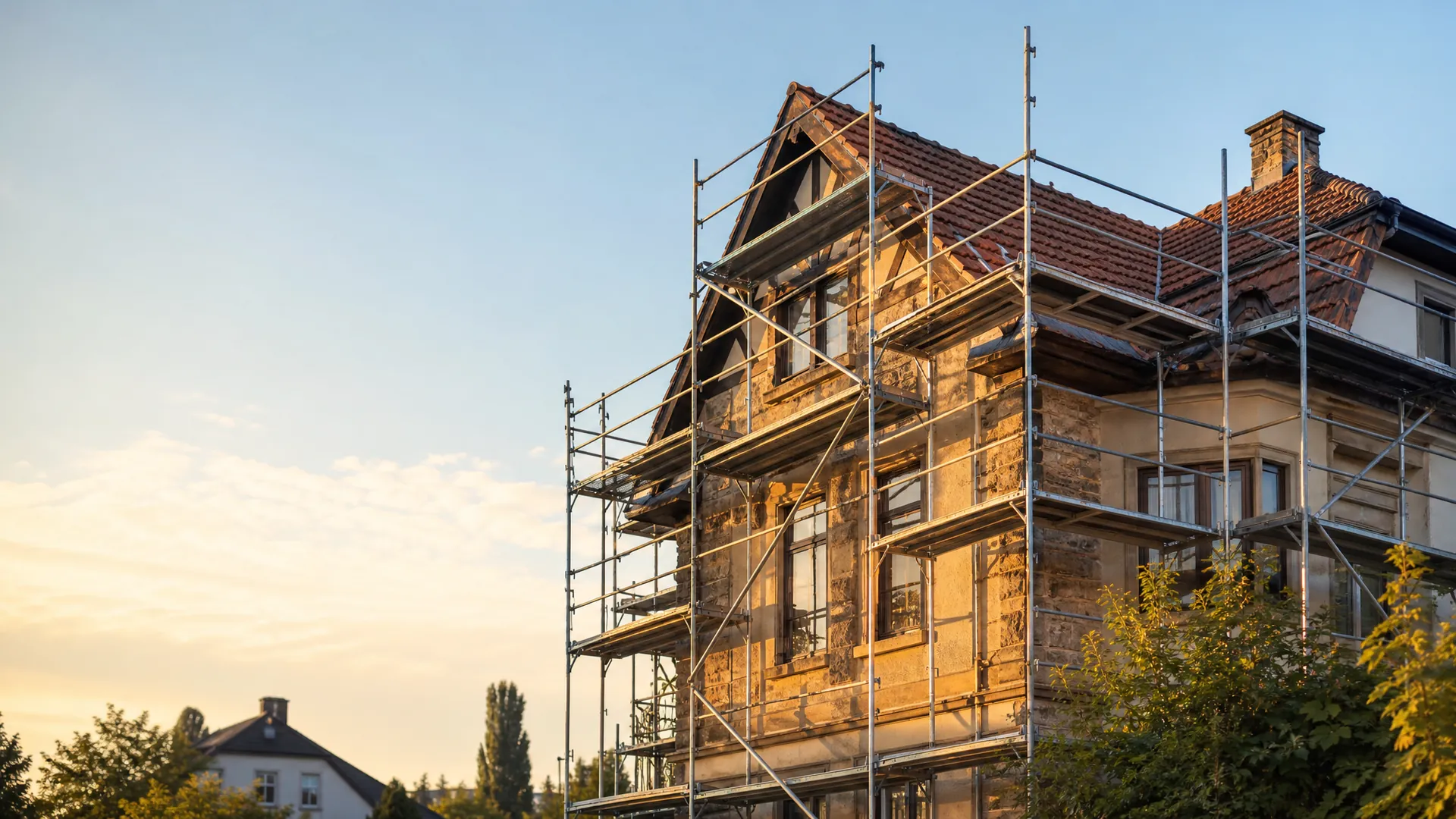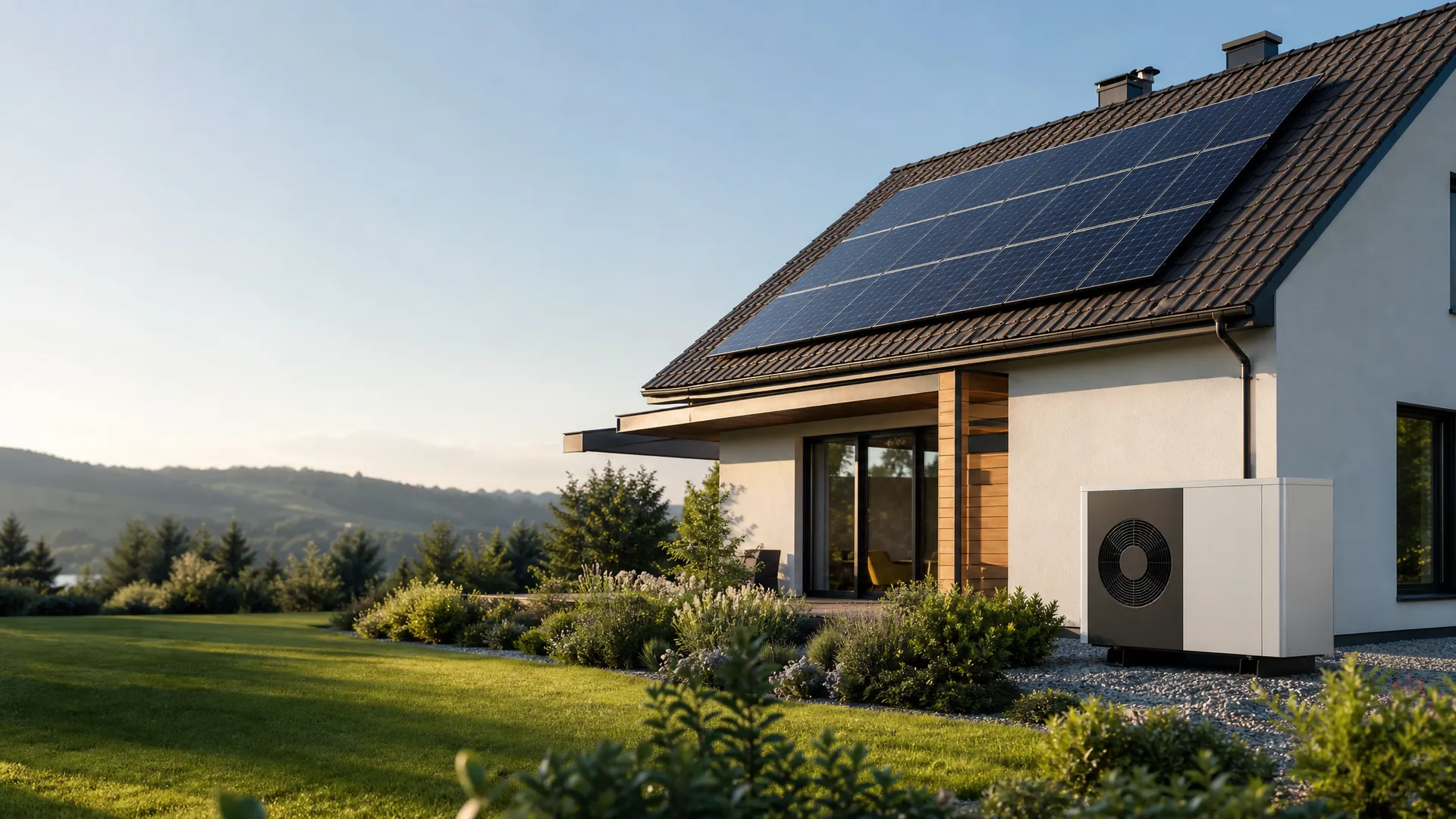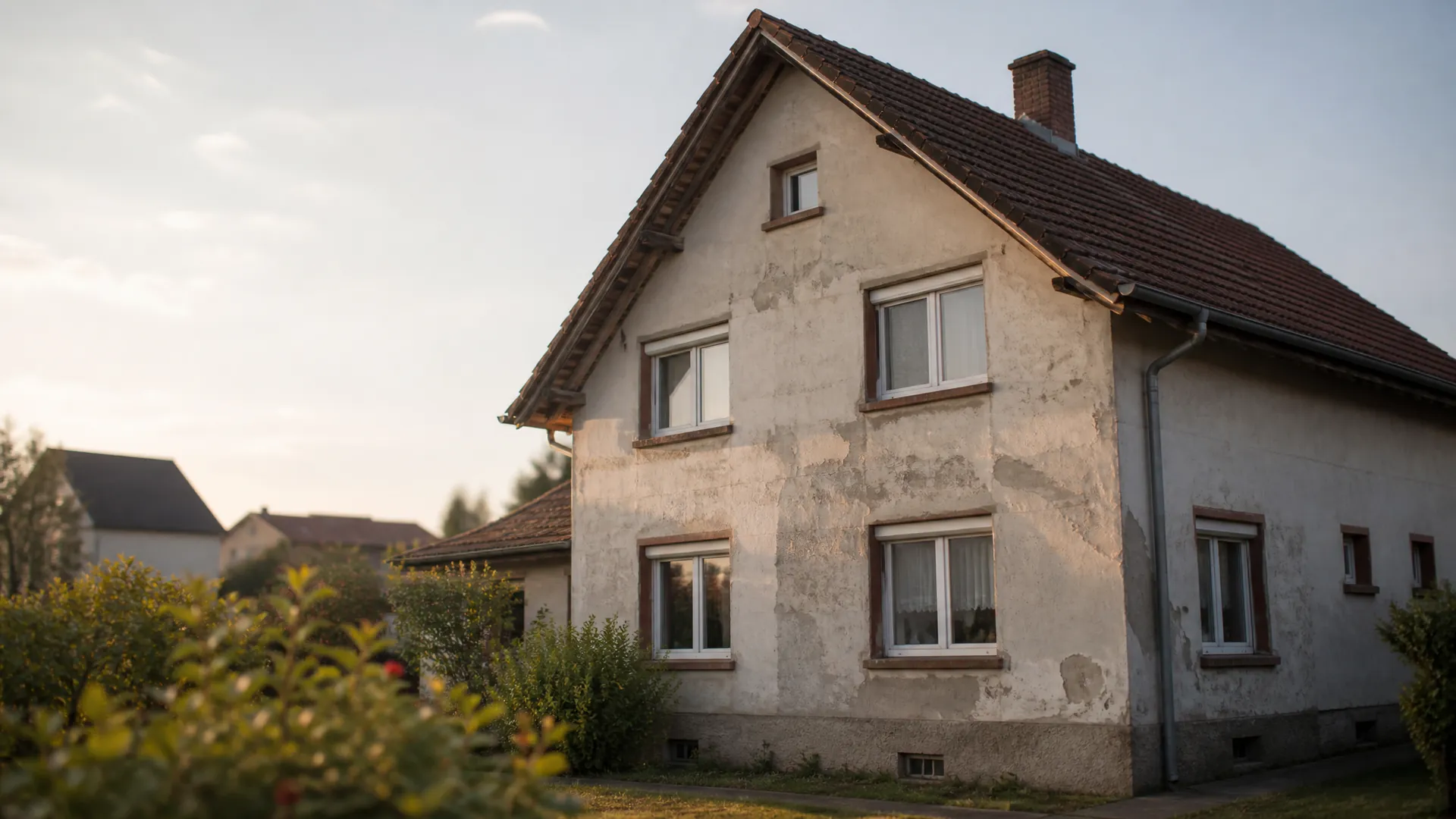
In the energy performance certificate, energy efficiency class (Energieeffizienzklasse) H stands for the worst rating a residential building can receive. Houses in this class consume a lot of energy, cause high heating costs and are increasingly in the focus of buyers and banks when sold. Anyone who owns or inherits such a house quickly asks what an energy-efficiency renovation costs and what improvement is realistically achievable. In Düsseldorf and throughout North Rhine-Westphalia, we have supported owners with their property and regularly value renovated as well as unrenovated objects. This guide explains what class H means, which measures come into consideration, what cost ranges you should expect, what obligations the Buildings Energy Act (GEG) provides for, and how a renovation affects the value.
What Energy Efficiency Class H Means
The energy performance certificate classifies residential buildings into classes from A+ to H. According to Annex 10 of the Buildings Energy Act (GEG), the decisive factor is the final energy demand or final energy consumption in kilowatt-hours per square metre of usable building area per year.
Class H is the worst level. It begins at a value of more than 250 kWh/(m²·a) and is open-ended. By way of comparison: a new build often reaches class A or B with less than 75 kWh/(m²·a). A class H house therefore consumes many times more energy.
- A+: up to 30 kWh/(m²·a)
- A: up to 50
- B: up to 75
- C: up to 100
- D: up to 130
- E: up to 160
- F: up to 200
- G: up to 250
- H: over 250
Class H typically applies to older buildings that have never been modernised in energy terms, such as unrenovated single- and two-family houses from the period before the first Thermal Insulation Ordinance of 1977. Uninsulated exterior walls, old windows, an inadequately insulated roof and an outdated heating system often come together here.
Why Class H Houses Cause High Costs
The high energy demand of a class H house is directly reflected in the running costs. In winter, a lot of heat is lost through uninsulated components, so the heating system has to work harder permanently. Depending on the energy source and market price, the annual heating costs can therefore be significantly higher than for a renovated house of comparable size.
In addition, there is the need to renovate the building fabric itself. Where little has been invested over decades, several components are often at the end of their service life at the same time. Typical weak points are:
- uninsulated or only thinly insulated exterior walls
- single- or double-glazed windows with leaky frames
- an uninsulated roof or an uninsulated top-floor ceiling
- an uninsulated basement ceiling
- an old, fossil-fuelled heating system with low efficiency
These factors are interdependent: a new heating system alone achieves little if the heat escapes through the building envelope. An effective improvement of class H is therefore generally achieved through a coordinated package of measures.
Typical Measures for Improvement
An energy-efficiency renovation addresses the building envelope and the building services. Which measures make sense depends on the condition of the individual building. The following combination is common:
- Facade insulation: usually as a thermal insulation composite system, alternatively as a rear-ventilated curtain facade. The greatest lever in the heat transition through the wall.
- Insulation of the roof or top-floor ceiling: reduces upward losses, often the most economical single measure.
- Insulation of the basement ceiling: lowers downward losses and improves comfort on the ground floor.
- Window replacement: modern triple glazing replaces old windows and closes thermal bridges.
- Heating replacement: replacement of the old fossil heating system, often by a heat pump (Wärmepumpe), provided insulation and heating surfaces are suitable.
- Ventilation with heat recovery: ensures air exchange after insulation and prevents moisture damage.
The order is not arbitrary. It usually makes sense to upgrade the envelope first and then size the heating system accordingly. An individual renovation roadmap helps to coordinate the steps with one another.
Cost Benchmarks: Individually and for a Single-Family House
The following ranges are benchmarks for a detached single-family house and vary considerably depending on size, condition, region and execution. They do not replace a specific quotation.
- Facade insulation (thermal insulation composite system): around 100 to 250 euros per square metre; for a single-family house often roughly 15,000 to 40,000 euros
- Roof or top-floor ceiling: about 50 to 150 euros per square metre, with the non-accessible top-floor ceiling at the lower end
- Basement ceiling: around 25 to 80 euros per square metre
- Window replacement (triple glazing): roughly 500 to 800 euros per window including installation, depending on size and frame material
- Heat pump (air-to-water) including installation: about 15,000 to 35,000 euros, depending on building and heating surfaces
- Ventilation system with heat recovery: around 8,000 to 20,000 euros, depending on a central or decentralised system
For a comprehensive energy-efficiency renovation of an unrenovated class H single-family house, these measures often add up to an order of magnitude of about 50,000 to 150,000 euros. With a very poor starting condition or high comfort requirements, the amount can be higher. If several trades are bundled, scaffolding, planning and travel can be used jointly.
Realistic Class Jumps
How much the efficiency class can be improved depends on the scope of the measures. Individual steps usually raise the building by one or two classes; a coordinated overall package can enable the jump from H into the middle range.
- A single measure such as roof insulation or window replacement: improves the value noticeably, but often raises the class by only one level.
- Envelope plus heating replacement in combination: a clear jump is possible, often towards classes D to C.
- Renovation to efficiency-house standard with high-quality insulation, heat pump and ventilation: classes B or A are achievable, but require the greatest effort.
The class actually achieved can only be calculated reliably after a survey by an energy consultancy, since it depends on the interplay of all components. Blanket promises about a particular class jump are not possible.
Energy requirements: GModG replaces the former GEG rules · Funding and renovation planning
The Building Modernisation Act (GModG) has applied since 29 July 2026. Former sections 47, 48, 71 and 72 GEG have been repealed. The blanket 65-percent requirement for new heating systems and the former age-based operating prohibition can therefore no longer be derived from those provisions. Sale planning should use the current law rather than an older checklist.
Energy requirements still apply. Section 36 GModG now covers alterations to external building components, while section 69 addresses heating and hot-water pipes. It also specifies when a two-year period applies after a change of ownership. The actual work required depends on the building, its components and the conditions of the relevant provision. Have the condition, technical requirements and costs assessed for the particular property.
Depending on the project, BAFA grants, KfW heating grant 458 or KfW 261 efficiency-house finance may be relevant. Heating funding changed on 21 July 2026. The previously quoted 30,000 euros of eligible costs for the first residential unit is no longer current for new applications; KfW currently specifies 28,000 euros. Funding rates, bonuses and other limits depend on the application and eligibility.
Check the appropriate programme before commissioning work and follow its project-start rules. Compare professional quotations, your own contribution, eligibility and implementation time. A grant does not guarantee that the investment will be recovered in the sale price. Consider whether to modernise yourself or leave the choices to buyers.
Economic Viability and Effect on Value
Whether a renovation pays off depends on several factors: the energy costs saved, the funding used, the condition of the components and whether repairs are due anyway. Insulation of the top-floor ceiling often amortises faster than complete facade insulation, because it is inexpensive and effective. Measures that replace work that is due anyway are generally more economical than purely energy-motivated interventions.
Beyond energy costs, the efficiency class increasingly affects the market value. Today, buyers factor in the expected heating costs and the need for renovation. A class H house can be sold, but is often traded with a price discount because the buyer has to take on the renovation. A renovation carried out or a well-documented possible renovation can improve the negotiating position.
Whether a renovation before the sale is worthwhile, or whether selling in the current condition makes more sense, can only be assessed for the specific property. Both paths are possible, and the market in Düsseldorf and North Rhine-Westphalia values location and fabric differently. A factual assessment of the value before and after a renovation provides the basis for the decision.